Creating PCB Artwork
One can also draw boards with any computer drawing program that permits you to space pads and traces exactly on .1" centers. Often there is a "Grid" variable that can provide guidance, and many programs allow you to "Snap" to that grid: i.e., all lines and items will end up being exactly on the grid dots simply by getting anywhere close to one. (One widely used program that can do this and more is AutoDesk'sAutoCAD , and there is an add-in package to do PCB work called For these drawings to be any good, you have to be able toprint out these drawings exactly to scale, on a device that can give you very sharp, black images. Laser printers can, and plotters will also if they have a good pen. (We have refillable plotter pens with Rapidograph-type tips that we use with India ink for smooth, black results.) You may need better-than-average paper to optimize the sharpness and contrast.||

2008 Addendum : OK, these days you are more likely to not even need a hard copy - you probably are just sending a computer file to a place that fabricates the boards directly. Also, this page used to warn folks not to put too much faith in using electronic CAD, on the grounds that good packages are very expensive; that having to spend time learning the software sucks up precious project time; and that autorouting is not magic and can make a lot of whack decisions. These objections are much less true now: there are more packages available at lower cost and better quality. See our Software page for many useful links to this stuff. Also, given the prevalence of surface mount components, you really may not have the option NOT to use CAD to design boards.
Wire wrapping is a common prototyping method for good reasons: it is easy to do, and can
sky plus box- Buy Me is a leading retailer in Sky television digiboxes. Specialising in a wide selection of Sky plus boxes and high definition digiboxes for satellite TV.
be very reliable when done correctly. Most importantly, it permits very easy modifications and corrections. If done right, a good wire-wrapped prototype can be used as your final product instead of just a test of your design, making it faster than wiring something on a white breadboard and then transferring it to a printed circuit board. The disadvantage comes in needing to use wire-wrapping sockets for all parts, and in having a circuit board that is thicker due to the long pins. I will be writing more on this here before long but for the moment, take a look at what an engineer with Ampex has written on the subject by clicking here. In addition, another person has a note on how NOT to wire wrap correctly. 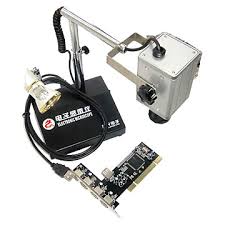
2008 Addendum These days neither the EE Shop nor students use wire-wrapping much, probably because it only works iPHONE INSURANCE-IPHONE INSURANCE COVER introduces low cost iphone insurance includes water damage, fraudulent call cover, theft, accidental damage and more… well with through-hole .1" devices, not so much fine-pitched surface mount devices.
Perf Boards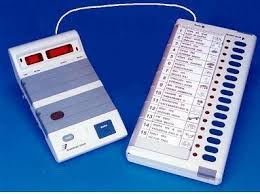 "Perf board" is phenolic or fiberglass circuit board with perforations every 1/10th inch, allowing common electronic devices to be mounted. The cheapest have no copper pads. Who hasn't made a quick and dirty circuit by sticking the parts on one of these and bending the leads underneath to tack together with solder? It might work, but it's messy and unreliable and not very solid. Fortunately, they make perf boards that have copper soldering pads around the holes so parts can be soldered in. Some boards just have a pad per hole; some have a variety of strip patterns suitable for DIP integrated circuits. Especially handy are the ones that have the same layout as the Global breadboards, as these permit you to easily transfer your breadboarded circuits. It's often possible to mix wirewrapping and soldered connections on such boards. These boards are a straightforward way to make projects and are what our Engineering Shop often uses for our one-of-a-kind small designs. A disadvantage to these is that, like any board with solder pads, if you solder and unsolder a pad more than a couple of times, it's likely to come off of the board. Any catalogue that carries electronic components is likely to carry these, but we've been pleasantly surprised to see that Radio Shack generally has quite a broad assortment of solder-pad perf board. More here soon.llGenerator ContainersllElectric Motors-Electric Motors, Industrial Fans, Industrial Extractor Fans,
Reconditioned Motors, Electric Motor Repair, Coolant Pumps, Plate Fans,
Motor Rewinds and Electric Motors for Sale.
Printed Circuit Boards
A key point for a student designer to remember is that printed circuit boards are often NOT the best choice when creating a new design. You really should not be thinking about drawing a circuit board until you have a circuit that you know works because you've breadboarded and tested it already. It's hard to modify an etched board; and I can almost guarantee you that an untried design will require changes. The time and effort needed to create the board may also be a drain on your limited time resources if you are doing a class project.
2008 Addendum: The advance of technology has changed this advice. Many integrated circuits can not be obtained in through-hole, .1" center packages any longer but are only made in fine-pitch or BGA surface mount packages. You CAN'T stick these into a white breadboard even if you tried. It is possible to buy or have made an adapter that is basically a tiny circuit board just big enough for such a chip, that brings the wires out to dual-inline .1" pins for traditional breadboarding. Obviously this is more hassle and expense, but what are you gonna do?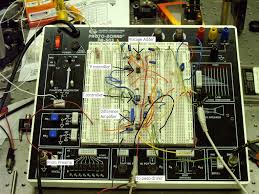 By all means take a look at The Green CirKit PCB prototyping on-line manual, an excellent on-line manual with downloadable versions available. (Of course you can always dump the job of laying out your board on a third party like pclayout.com ). Processes
2008 Addendum The UN-L Engineering Electronics Shop no longer uses any photochemical exposure and etching processes to make circuit boards. All PCB manufacturing is done with an LPKF routing machine that drills and mills copper around traces on plain copper-clad boards, using files generated by electronic CAD programs. Talk to Tom Grady in the EE Shop for more details. However, I don't like to see "legacy" design information vanish from the Web, so I've left the following information about older processes in place - just understand that we no longer use the chemical stuf 
f. It was nasty and scary stuff anyway. Most printed circuit board manfacturing is done by putting the pattern of the circuit traces and pads onto a sheet of copper-clad phenolic or fiberglass board using substances that will resist the action of copper-etching solutions. This can be done by directly drawing on a board with a resist pen or paint (here's one method of resist-pen plotting) ; by silkscreening the design on to the copper; or by a photographic process where the portions of a sensitized board that are struck by ultraviolet light passing through a negative image of the traces become, following development, resistant to etchant. A new and relatively easy method is the use of special sheets of material on which a circuit design can be printed with a laser printer or photocopier, after which the pattern is transferred to a copper clad board with an ordinary steam iron. This process is reviewed here. Also, a new process using toner transfer is advertised here. In the UN-L E.E. Shop we have most frequently used the negative-photoresist etching process to make PCBs. In this system, the parts of the board that are exposed to UV light become resistant to etching, so any artwork of the circuit board must be turned into a high-contrast photographic contact negative that is transparent where one wishes there to be copper and is black where it is to be etched away. There ARE boards and chemicals that permit a positive-photoresist process; wherever the transparency is black, is where there will ultimately be copper. This can be more convenient from the standpoint of creating the photographic mask from artwork, in that one can try things like laser printing or photocopying on overhead transparencies sheets designed for this purpose. (I should comment that in our experiments it can be difficult to make the traces sufficiently black using this method. HOWEVER, , there's a way to fix that problem: read this method .) In addition, one can purchase rub-on tapes of circuit traces and pads that are laid down on translucent material to make a positive image. However, we have found the positive photoresist process to be much less forgiving of incorrect exposure times, development times, and solution temperatures, often resulting in several tries being required to create a satisfactory board. As a result we stay with negative photoresist materials, which work reliably almost every time and are far less critical in use. 
!!PLEASE NOTE: Developing and etching PCBs is a process that involves chemicals that can burn your skin, have hazardous neurotoxic fumes, can be absorbed into your bloodstream, and CANNOT be disposed of by dumping into ordinary sanitary drains. It should NEVER be done without powered ventilation or in an area accessible by children or pets. Of lesser but significant note is that it is common for these materials to wreak havoc on flooring, furniture, and especially on clothing. (Splash some etchant on your clothes and you might not notice until after you wash them that you suddenly have what looks like a shotgun blast through your jeans.) In short: don't fool with it unless you have proper facilities to do it right, and follow ALL safety cautions mentioned on the materials. You may well be better off to farm out the process to a commercial board maker; some are listed in this list of PCB Fabricators. New . . . you might also want to check with PCB-QuoteFree multiple quotes for PCB Layout, Fabrication, Assembly. The E.E. Shop can also help you fabricate a printed circuit board: click here for details on what we need.||energy saving light bulbs-UK experts in LED lighting and leading supplier of LED energy saving light bulbs in the UK. LED bulbs and LED spotlights Nobody does electronics work for long without running into the classic white plastic prototyping breadboard, made famous by Global. These are the de facto standard for whipping up a circuit just to see if it works. They do a good job of this and I don't know what I'd do without them, but remember that they have limitations.

As the example above shows, older scanning software can cause scanned resumes to look very different than your original resume. However, this doesn't happen with new, more sophisticated scanning systems. For example, Resumix keeps a snapshot of your resume which can be printed. This allows your resume to be scanned as well as being stored as a picture without changing it. But, many employers may not have this newer sophisticated software because such systems can cost up to $100,000. As a result, many employers are still using scanning software that is older and results in scanning problems. Therefore, you need to design your scannable resume to be scanned correctly by both older and newer scanning software. If you have typed your resume with a word processor all you need to do is convert it into an ASCII file, or plain text format with line breaks, by using your word processing program's "save as" option. Converting your file will remove formatting commands such as bolding, centering, bullets and graphic lines. When you print your resume from this plain text format you'll see that is very plain and downright ugly just like Fran's scanned resume. But, it's now very computer friendly. Here are the steps I took to convert Fran's nice looking resume into an ASCII or plain text format. I used MS Word and Notepad which made these steps very easy. You may find that your wordprocessing program or text editor works slightly differently. Don't be afraid to experiment - but save each version of your resume as you work on it. Especially your original resume! Test and proof read each version of your resume that you create. || sky plus box- Buy Me is a leading retailer in Sky television digiboxes. Specialising in a wide selection of Sky plus boxes and high definition digiboxes for satellite TV.
1. Get a mini-press kit together specifically for getting booked. Include a brief musical and personal history, a few terse sound bites on the music itself (quotes you can cull from reviews other people have written, or you write a few descriptive lines yourself), and other information that shows why people will or need to come out to see you perform live. Find something interesting about yourself or your process and talk briefly about it. Press people love interesting aspects about their potential stories, so if you’re a neurosurgeon who’s dabbling in digital audio and donating a percentage of your gig revenue to a charity you should highlight it. If you’ve had some significant press exposure or have played in a well-regarded club or with a higher-profile artist, you should definitely mention it. Keep it short though—no more than a single page printed or PDF-ified. Here’s my single-sheet bio from subVariant that you can use as an example. d d Ed. note: I’ll reinforce what Liz is saying; since I write regularly for Keyboard Magazine I get an absurd number of press kits. (I can’t imagine what it’d be like if I actually wrote artist coverage most of the time.) Press kits are pretty much all awful: too long, over-hyped and impossible to read, and that’s often from big PR firms. As an artist yourself, you can probably do better: skip straight to what’s really important in the music, and anything unusual and personal about you. -PK
|
